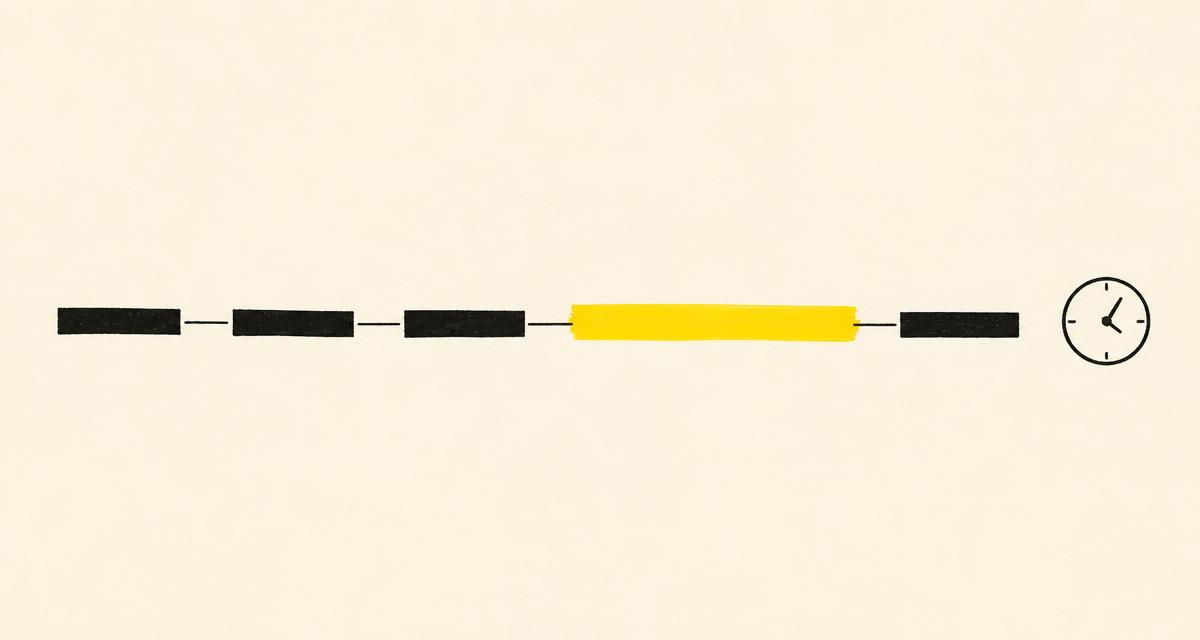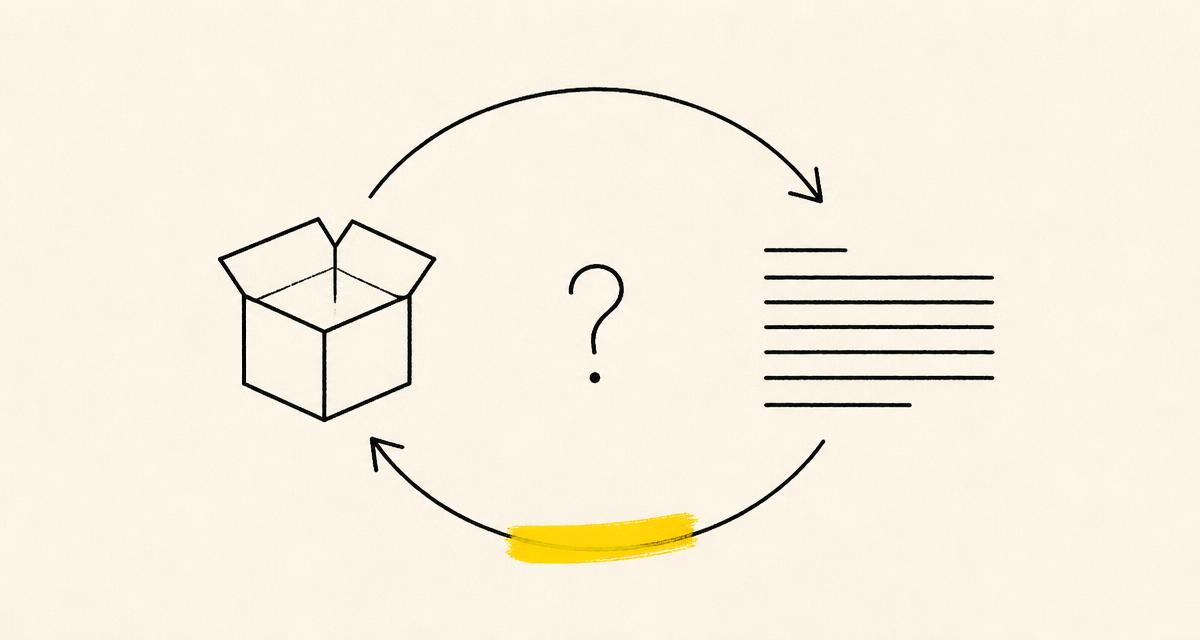
Most web projects start with a wireframe. Boxes get drawn, sections get named "Hero," "Features," "Testimonials," and then someone goes looking for words to fill them. That order feels efficient. It's actually backwards, and it's why so many sites end up with copy that reads like it was written to fit a box instead of the other way around.
What happens when design goes first
A wireframe with placeholder text ("Lorem ipsum," or worse, "Compelling headline here") makes a decision before the words exist: how much space the message gets. Three lines for the headline. One sentence for the subhead. A fixed number of feature cards, each with the same character limit.
Real content rarely fits that evenly. Sometimes the honest headline is four words. Sometimes it needs twelve. If the design already locked in the space, the copy gets stretched or squeezed to match a box that was never built for it, and the site ends up saying something slightly off from what the business actually needed to say.
What content-first actually means
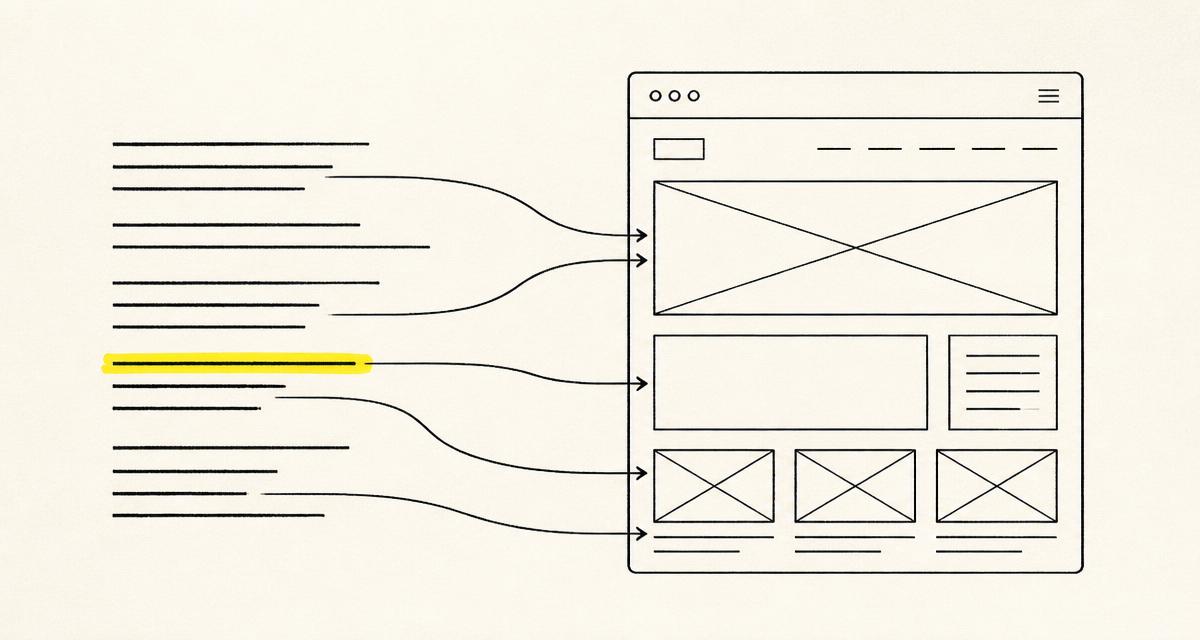
It doesn't mean skipping design or treating it as an afterthought. It means the words get figured out first, at real length, in real sentences, so the design can be built around what actually needs to be communicated instead of guessing at it.
That changes what a designer is solving for. Instead of "what goes in this box," the question becomes "how do I make this specific message land." A headline that needs to be short gets treated as short. A section that needs three points instead of four doesn't get artificially padded to match a symmetrical grid. The design ends up in service of the message, which is what makes a brand feel clear instead of just decorated.
The harder conversation
This is the part that's actually difficult to hold as a policy: clients want to see something visual immediately. A content plan feels abstract to a lot of people, and a homepage mockup feels like progress. Pushing back on "can we just see a design first" is a real conversation, not a one-line policy you can hide behind.
The honest answer is that a design built before the words exist isn't really a design of the site, it's a design of a guess. It'll get revised anyway, usually more than once, once real copy shows the design didn't account for its length, tone, or actual number of points. Doing the words first doesn't slow the project down, it removes a round of revisions that would've happened later regardless.
What this looks like in practice
A page's purpose gets defined before its layout. Word counts get roughed in based on what actually needs to be said, not a template default. Sections get built to hold what they need to hold, not the reverse.
This is also the whole reason a content-planning tool needs to exist as something more than a wireframe with text boxes swapped for words. SiteWrite treats the plan and the writing as the actual first phase of the project, with the client reviewing and approving the words themselves before anyone touches a design file. By the time a designer opens anything, the message is already settled, which means the design gets to do what it's actually good at: making that message land.